Canada’s central bank is threading one of the more difficult needles in the developed world right now: an economy still absorbing structural damage from US tariffs, hit simultaneously by an oil-driven inflation spike it had no hand in creating.
The July Rate Decision
The Bank of Canada held its policy rate at 2.25 percent on July 15, with the Bank Rate at 2.5 percent and the deposit rate at 2.20 percent. Governor Tiff Macklem’s Governing Council noted clear signs that growth resumed in the second quarter, with output estimated to have expanded at a 2.5 percent pace — a marked improvement after GDP growth stalled through much of the prior year as the economy adjusted to new tariffs, elevated uncertainty and slower population growth.
Two Shocks, One Policy Rate
The Bank’s own language captures the dual nature of the challenge precisely: the Canadian economy is expected to grow at a moderate pace as it continues to adjust to US tariffs, even as inflation has moved up due to higher oil prices linked to the war in the Middle East. CPI inflation rose to 3.2 percent in May, driven mainly by higher gasoline prices tied to the Middle East conflict — a full percentage point above the Bank’s 2 percent target, and arriving at precisely the moment the Bank would otherwise have room to ease policy further to support tariff-hit exporters.
Governing Council has been explicit about how it’s threading this: it is looking through the war’s immediate impact on inflation but will not let higher energy prices become persistent, a formulation that leaves the door open to holding rates steady for longer than tariff damage alone would justify, if energy-driven price pressures show signs of becoming embedded.
The Tariff Damage Is Structural, Not Cyclical
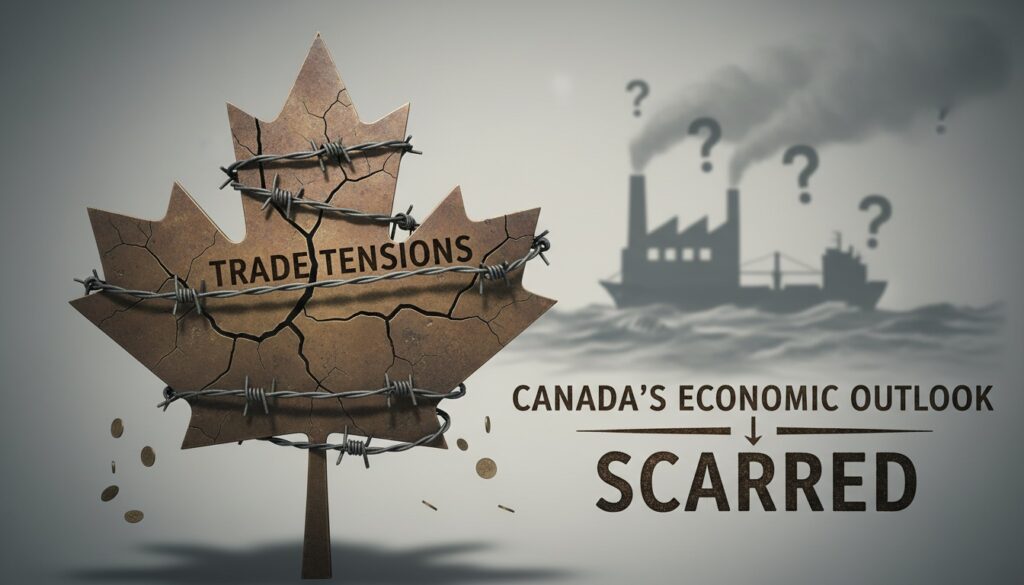
The more consequential finding from the Bank’s own analysis is that tariff damage isn’t expected to simply fade once trade tensions ease. By the end of 2026, Canadian GDP is projected to be roughly 1.5 percent lower than the Bank’s pre-tariff January 2025 baseline projection, with roughly half of that shortfall attributed to permanently reduced potential output rather than temporary excess supply. RBC Economics has echoed this assessment, noting the Bank expects Canada’s potential output growth to slow to just 1.0 percent in 2026 from 1.6 percent in 2025, before a modest recovery to 1.3 percent in 2027 — a durable scarring effect on the economy’s productive capacity.
Sector-specific pain has been concentrated: steel and lumber exports have declined significantly under US trade restrictions, even as overall export declines have proven less severe than initially feared, reflecting Canadian business adaptability and diversification away from US-dependent supply chains.
The Currency Angle
One under-discussed transmission channel is the Canadian dollar. The Bank notes that US bond yields have risen while Canadian yields have remained comparatively flat, a widening differential that has contributed directly to the loonie’s depreciation — itself a factor working against the Bank’s efforts to contain imported inflation, since a weaker currency makes oil and other dollar-denominated imports more expensive in Canadian-dollar terms.
The Global Growth Context
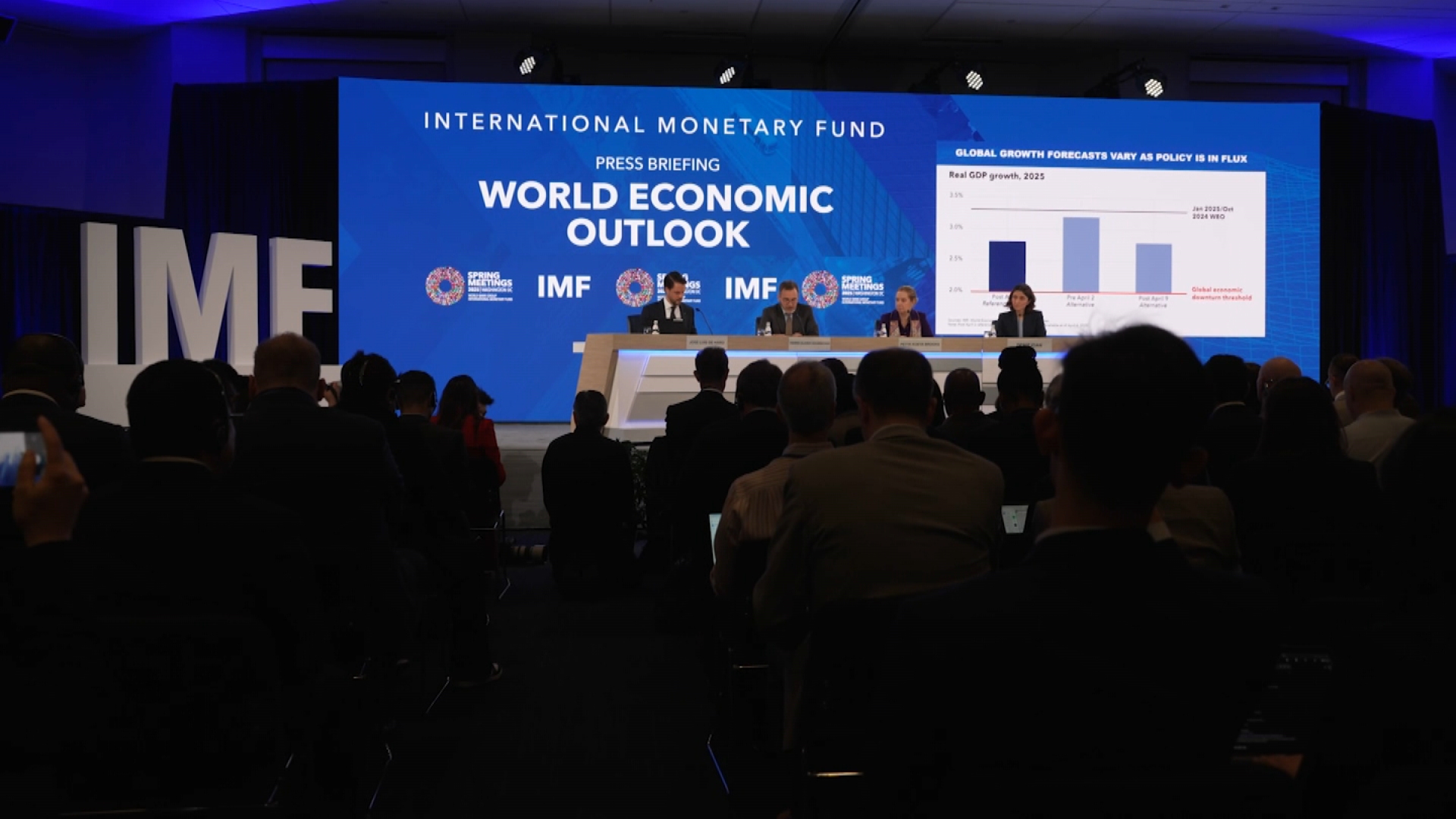
The Bank’s own global outlook has darkened accordingly: it now projects global GDP growth will slow to 2.75 percent in 2026, largely because of the Middle East conflict, before recovering to around 3.25 percent in 2027 and 2028 — a trajectory that puts Canada’s own projected growth of 0.7 percent in 2026, accelerating to 1.8 percent in both 2027 and 2028, in a global context of broad-based, geopolitically driven deceleration rather than a Canada-specific weakness.
What to Watch
The Bank’s next scheduled rate decision falls on September 2, 2026, with the full Monetary Policy Report following on October 28. Given the current mix of persistent tariff-related structural damage and temporary but sticky energy-driven inflation, the most likely near-term path is continued policy stability rather than either cuts or hikes — unless the Strait of Hormuz situation, covered in depth elsewhere in this series, either resolves meaningfully or escalates further.